
With every expanding demand for data security and continuous access, companies are attractive more and more dependent on productive identity management solutions. The field is fast growing, and among the leaders is Okta, a rostrum known for its thorough toolbox that makes straightforward access control and makes security quantifiers more resilient. This arising blog will spotlight some salient features of Okta's offerings, from its End User Adoption Toolkit to its strategy to managing directories.
Okta End User Adoption Toolkit: Promoting fluidity Integration
First, one of the key trials organizations face is the wide-ranging adoption of new technology among end-users.
Okta overcomes this obstacle through its End User Adoption Toolkit, a holistic tool to certify uninterrupted transition and integration process

The toolkit comprises:
- Training Resources:Teaching modules and documentation which the users can learn to fit and accept the Okta stage.
- Communication Templates:The organization uses pre-formulated templates to communicate updates and modifications related to Okta, which safeguards transparency and clarity in the organization.
- Support Materials:The self-help troubleshooting mentors and the FAQs which the users can read in order to help themselves solve problems instead of asking IT support are the major factors of IT support service reduction.
With proper use of this toolkit, organizations can quickly get on board with Okta's identity management solutions, thus securing the most out of their investment and making sure their operations run smoothly.
Okta Access Control: Strengthening Security Posture
Okta's access control features are the underlying essence of the company's value. The forum gives full control of user permissions and authentication processes to prevent unauthorized access to susceptible news and applications. The characterizing characteristics are as follows:
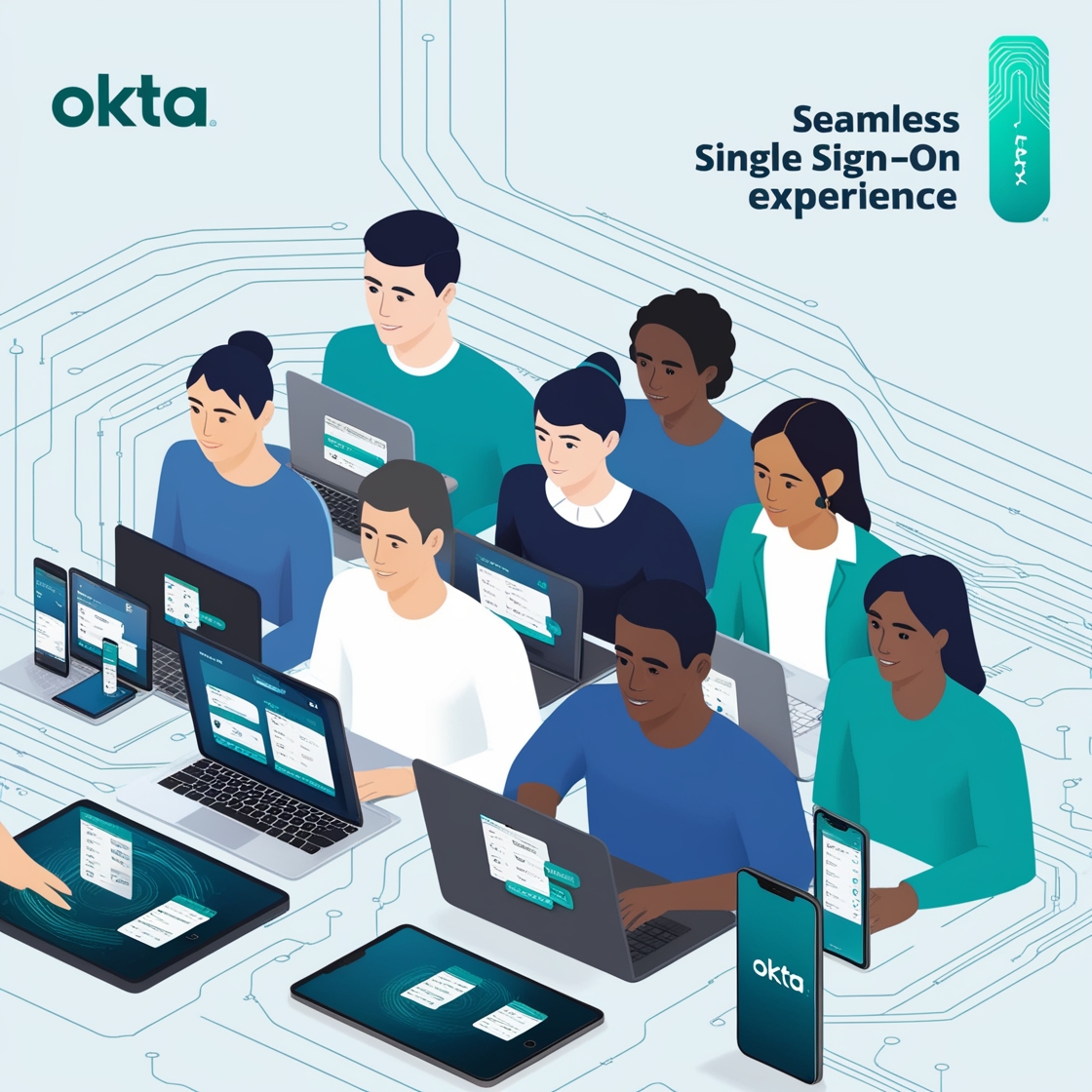
- Soloist Sign-On (SSO): Users can access multiple applications in a fast and simple way, with only one set of credentials, thus the user convenience is amplified without any security risks.
- Multi-Component Authentication (MFA): Authentication protocols are strengthened by making it mandatory for the user to complete extra verification processes that are not just limited to passwords, but rather, include biometrics or SMS codes.
- Lifecycle Management: Automates user provisioning and de-provisioning by making a decision based on the set policies. This will automatically adjust the access, thus the security risks associated with inactive accounts will be minimized.
Through these features, Okta bolsters organizations to enforce stringent access policies tailored to their exact security mandates, thus enabling productive mitigation of the advancing threat scenery.
Okta Universal Directory vs. Active Directory: Bridging the Gap
For organizations adopting Okta, the relationship between its Universal Directory (UD) and existing Active Directory (AD) setups is often a everyday thoughtfulness. AD has always been the main identity management system on-site, but Okta's UD, which is cloud-based, is a new procedure to AD that complements and extends capacity.
Universal Directory (UD):
- Cloud-Centric Identity Management:A system that saves and processes user identities for cloud applications and services which makes it a great solution for companies with fluctuating number of employees or growing cloud context.
- Integration Skills:The new system merges without difficulty with pre-existing Active Directory setups via lightweight directory access protocol (LDAP), thus upholding the continuity and simpleness for transferring to this new system.
Active Directory (AD):
- On-Premises Legacy:Secures that the collection of user identities and access controls is kept within the confines of protected on-premises surroundings, which is suitable for organizations that already have a developed infrastructure.
- Hybrid Capacity:Expedites hybrid deployment choices enabling the connection of an on-premises AD and cloud-based applications which are managed by Okta UD.
The marriage of Okta UD and AD lets organizations use the best of both worlds, thereby having one identity management system across the on-premises and cloud ambiance.
Result
Given that organizations nowadays are putting their priorities on security and efficacy, the value of identity management solutions like Okta is attaining more and more. From promoting fluidity integration through its End User Adoption Toolkit to strengthening access control via resilient aspects, Okta is the one to give the businesses courage to deal with the difficulties of identity management. In case Okta UD is the choice for cloud-centric flexibility or the option to integrate with existing AD infrastructure, the organization can power Okta's offerings to achieve a combined and guaranteed identity management framework tailored to their one-of-a-kind needs.